

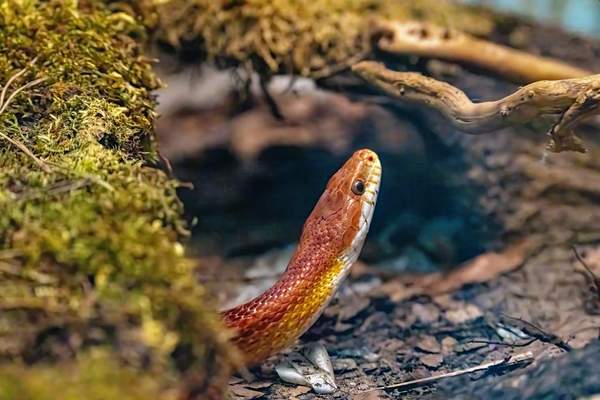
Corn snakes are popular first pet snakes for good reasons: they are generally calm, commonly captive-bred, and usually accept a straightforward diet of rodents. Their care is not difficult to learn, but a snake that seems quiet can still be living in the wrong conditions. The best starting point is an enclosure that lets it hide, warm up, cool down, and explore.
Build a Secure Corn Snake Enclosure
Plan for adult size, not just the hatchling you bring home. A corn snake may reach around 150 cm (5 feet), and its enclosure should be at least long enough for it to stretch out fully. Allow a width and height of roughly one-third of its length as a minimum; extra space and climbing opportunities are welcome.
A secure, well-ventilated vivarium is essential because corn snakes squeeze through small gaps. Check door locks, cable openings, and lid clips before introducing the snake. Keep the enclosure away from windows, radiators, and drafts that disrupt temperatures. House corn snakes individually rather than assuming they need companions.
Arrange Hides and Climbing Space
Place at least two snug hides, one on the warm side and another on the cool side. Add stable branches, cork bark, and reptile-safe plants for cover and exploration. Provide a sturdy water bowl. A larger enclosure can work for a young snake when there are plenty of sheltered routes between hiding places.
Get Corn Snake Temperature and Lighting Right
Snakes rely on external warmth to regulate body temperature. Create a gradient rather than heating the whole enclosure evenly: aim for a basking area of approximately 28–30°C (82–86°F) and a cooler end near 20–24°C (68–75°F). Measure both ends with digital thermometers and use a thermostat on every heat source. Its setting does not replace actual temperature checks.
Place a properly guarded overhead heat source at one end so the snake cannot touch a hot bulb. At night, lights should go off; a drop toward 16–20°C (61–68°F) can be appropriate, provided the enclosure does not become too cold. If overnight warmth is needed, use thermostatically controlled, non-light-emitting heat.
Provide a consistent day-night cycle, commonly around 12 hours of daylight. Appropriate low-output UVB lighting can support natural behaviour. Follow the manufacturer’s installation guidance and provide shaded areas, especially for light-sensitive morphs. A separate reptile heating and UVB guide can help with equipment choices.
Manage Humidity and Shedding
A hygrometer helps you avoid guessing about moisture. Around 40–50% ambient humidity is a useful starting target, though readings vary with conditions. Provide a humid hide containing slightly damp moss, especially before shedding. The rest of the enclosure should not stay wet or stagnant.
Before shedding, a corn snake may become dull, develop cloudy-looking eyes, and hide more often. Avoid unnecessary handling. Afterwards, check that the skin came away fully, including the tail tip and eye coverings. Never pull off stuck skin or eye caps; persistent retained shed warrants reptile veterinary advice.
Choose a Practical Corn Snake Substrate
Good corn snake substrate should be clean, safe, and suitable for burrowing. Reptile-safe organic soil blends create a naturalistic floor, while aspen bedding is another option when kept dry. Avoid aromatic cedar or pine shavings, dusty materials, and loose sand alone. Remove soiled patches promptly.
Paper towels are useful temporarily for a new snake under observation or during veterinary treatment, but offer little long-term enrichment. For more detail on different bedding choices, a dedicated snake substrate guide can explain the trade-offs.
Make Corn Snake Feeding Predictable
Most captive corn snakes thrive on appropriately sized, commercially supplied frozen-thawed mice. Avoid live prey, which can injure a snake. Thaw rodents completely using safe food-handling practices, warm them appropriately, and offer them with tongs rather than fingers. Never microwave prey or leave an uneaten thawed rodent inside.
Prey should be roughly comparable to, or slightly wider than, the snake’s broadest section, adjusted for body condition. Hatchlings may eat a pinky mouse every five to seven days. Juveniles need adjustments as they grow; many healthy adults eat approximately every seven to fourteen days. These are starting points, not rigid rules.
A Useful First-Month Routine
Suppose you bring home a young captive-bred corn snake on Saturday. Check temperatures and water daily, but let it settle without routine handling for about a week. Ask the breeder about its latest meal and prey size before feeding. Record dates, portions, weight, and appetite. A simple log reveals trends that memory misses.
Handle Gently and Respect the Snake’s Signals
Once the snake has settled and feeds reliably, begin with brief, calm handling sessions. Scoop rather than grab, support its body with both hands, and allow it to move freely. Keep it near a safe surface and separate from other pets.
Wait at least 48 hours after feeding before handling to reduce regurgitation risk. Leave the snake alone during shedding or when it adopts a defensive S-shaped posture. Wash hands before and after contact; reptiles can carry Salmonella even when healthy. Supervise children closely.
Clean Regularly and Watch for Health Changes
Refresh drinking water daily and remove droppings or wet bedding immediately. Periodically clean surfaces with reptile-safe disinfectant, following instructions and rinsing thoroughly. Monitor weight, skin, breathing, appetite, and waste. Wheezing, nostril discharge, unusual swelling, or prolonged food refusal with weight loss call for a reptile-experienced veterinarian.
Set up and test the enclosure before your snake arrives. Reliable heating, accurate measurements, and secure hides prevent many beginner problems. A guide to snake shedding problems is also useful when learning what normal skin changes look like.
Frequently Asked Questions
Are corn snakes good for beginners?
Yes, they are often suitable for prepared beginners because they are nonvenomous and generally manageable. They still need daily checks, a secure habitat, appropriate feeding, and reptile veterinary care.
How often should I feed an adult corn snake?
Many adults eat an appropriately sized mouse every seven to fourteen days. Monitor weight and body shape, and adjust portions or frequency if needed.
Do corn snakes need a heat lamp at night?
Not if the room stays within a safe overnight range. Turn visible lighting off; use controlled, non-light-emitting heat if temperatures would otherwise fall too low.
Why is my corn snake hiding all day?
Hiding is normal, particularly after a move, meal, or before shedding. Check temperatures and shelter, and seek advice if hiding accompanies illness signs or changes in weight.
Conclusion
Successful corn snake care starts with choices: room to stretch, secure hides, warm and cool areas, clean water, and appropriate meals. Check conditions consistently and learn your snake’s normal behaviour. Steady attention matters more than elaborate equipment.
