

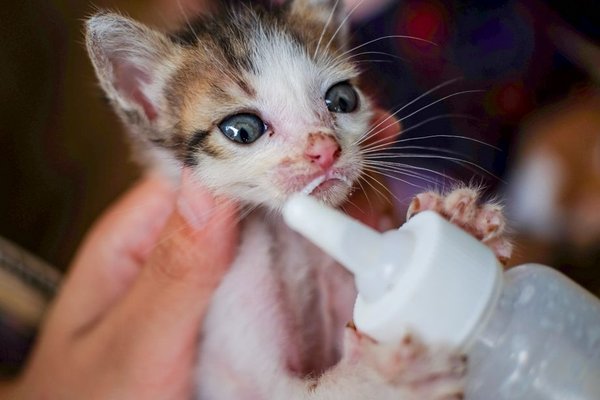
A kitten’s appetite changes quickly. The most useful feeding plan is therefore not one fixed portion repeated for a year, but a schedule that changes with age, body weight, food type, and the calorie content printed on the package. A healthy kitten should gain weight steadily, stay active.
Kitten Feeding Chart by Age
Newborn to 2 weeks: kittens should normally nurse from their mother. Orphaned kittens need a commercial kitten milk replacer every 2 to 4 hours, including overnight. The exact millilitres per feeding should come from the milk replacer label and the kitten’s current weight, because formulas vary in calorie concentration. Cow’s milk and routine goat’s milk are not suitable substitutes for complete kitten milk replacer.
2 to 4 weeks: continue mother’s milk or kitten milk replacer, usually every 4 to 6 hours if hand-rearing. Around 3 to 4 weeks, many kittens can begin learning to lap a thin gruel made from wet kitten food mixed with warm milk replacer. This is the beginning of weaning kittens, not an abrupt switch away from milk.
4 to 8 weeks: gradually make the gruel thicker until the kitten is eating complete and balanced kitten food. Offer about four small meals daily, then move toward three to four meals as eating skills improve. Divide the food manufacturer’s recommended daily amount for the kitten’s weight among those meals rather than treating the package amount as a per-meal serving.
2 to 4 months: feed a food labelled for kitten growth and offer three to four meals a day. Kittens under four months generally cope better with several small meals because their stomachs are small while their energy needs are high.
4 to 6 months: three meals a day is a practical kitten food schedule for most healthy kittens. Growth is still rapid, so continue kitten-formulated food. Check the feeding guide every few weeks as body weight changes, and adjust portions according to body condition, activity, neuter status.
6 to 12 months: most kittens can move to two meals a day. Continue a complete kitten diet until growth is essentially finished, commonly around 9 to 12 months. Larger breeds or kittens with special health needs may follow a different timetable, so the veterinarian’s recommendation should take priority.
How Much to Feed a Kitten
There is no single reliable answer in cups, cans, or grams for every kitten. Two foods can look similar but contain very different calories per gram. The safest starting point is the feeding guide on a complete and balanced kitten food, matched to the kitten’s current weight and age, then adjusted according to growth and body condition.
For a practical example, imagine your kitten’s food label recommends 180 calories per day for its current size and each pouch contains 90 calories. The daily ration would be two pouches total. For a three-meal schedule, that becomes roughly two-thirds of a pouch per meal. If treats are given, they should be counted within the overall intake rather than added endlessly on top.
Weekly weighing is especially useful during the first months. A kitchen scale works well for very young kittens; a pet or bathroom scale can be used later. If weight gain stalls, appetite falls, diarrhoea develops, or the kitten seems weak, contact a veterinarian rather than simply increasing food.
What Type of Food Should Kittens Eat?
Choose a food specifically formulated for growth or for all life stages and check that it is nutritionally complete and balanced. Growing kittens need more energy and a different nutrient profile than adult cats. Feeding adult-maintenance food too early can make it harder for a kitten to meet those needs in a reasonable portion.
Wet food can help with hydration and is easy for small kittens to eat. Dry food is convenient and calorie-dense. Many owners use both. Fresh water should always be available. Avoid adding vitamin or mineral supplements unless a veterinarian recommends them.
How to Transition Between Foods
Sudden food changes can upset a kitten’s stomach. When changing brands, flavours, or moving from a weaning mixture to regular kitten food, make the transition gradually over several days. Start with mostly the old food and a small amount of the new food, then increase the new portion while reducing the old one.
During weaning, texture matters as much as flavour. A four-week-old kitten may accept a soft slurry but struggle with dry kibble. By six to eight weeks, most healthy kittens can eat solid kitten food independently. Keep meals calm, use shallow dishes, and clean wet-food bowls promptly.
Signs the Schedule Needs Adjusting
A feeding schedule is a starting framework, not a rigid rule. A kitten that is constantly hungry but staying lean may need a portion review, while a kitten gaining excessive body fat may be receiving too many calories. Neutering can also reduce energy requirements, so portions sometimes need adjustment afterward even though kitten food should usually continue during the growth period.
Useful related topics to explore on your site include kitten weight and growth, kitten vaccinations, and preparing your home for a new kitten. These make natural internal-link destinations because feeding, growth monitoring, preventive care, and home setup are closely connected during the first year.
Frequently Asked Questions
How often should an 8-week-old kitten eat?
Most healthy 8-week-old kittens do well with three to four small meals a day. Use the kitten food label to calculate the total daily amount, then divide it across the meals.
Can kittens eat adult cat food?
An occasional bite is unlikely to cause a problem, but adult-maintenance food should not be the main diet for a growing kitten. Choose food formulated for growth until the kitten approaches adulthood, usually around 9 to 12 months.
Should I leave dry food out all day?
Free-feeding can make intake difficult to measure and may encourage overeating in some kittens. Measured meals make it easier to notice appetite changes and control daily calories. If you do leave dry food available, still track the total amount offered and eaten.
When should kittens stop drinking milk?
Weaning usually begins around 3 to 4 weeks and progresses over the following weeks. Most kittens are eating solid kitten food by about 6 to 8 weeks. Orphaned kittens should use commercial kitten milk replacer rather than cow’s milk while milk feeding is still required.
A Simple Schedule That Grows With Your Kitten
The best kitten feeding schedule by age becomes less frequent as the kitten matures: milk feedings every few hours in the neonatal period, several small meals during weaning, about three meals through much of the first six months, and usually two meals from six months toward adulthood. Portion size should always come from the kitten’s weight, the calorie density of the chosen food, and body-condition monitoring rather than a universal scoop size. Rechecking weight and appetite regularly keeps the plan responsive to the kitten actually in front of you.
