

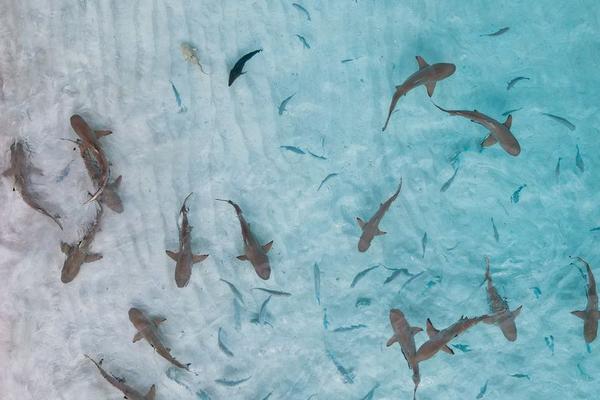
A sheltered bay may look quiet from shore, but beneath the surface it can be a busy place for young sharks. Tidal channels carry food, seagrass beds shelter prey, and muddy shallows offer conditions that some species use during their earliest years. Understanding shark nurseries and coastal habitats means looking beyond where sharks are born to where they repeatedly grow, feed, and survive.
Not every coastline is a nursery, and not every shark needs the same kind of water. Scientists examine how particular species use an area over time before deciding which habitats are especially important.
What Makes a Shark Nursery?
A shark nursery is an area used regularly by newborn or juvenile sharks during early life. It may overlap with a place where females give birth, but the terms are not interchangeable. Shark breeding grounds can refer to reproductive areas, while nursery habitat concerns how young sharks use a location after birth or hatching.
Marine researchers commonly use three tests: young sharks occur there more often than in comparable locations, they remain or return for extended periods, and the habitat is used repeatedly across years. Finding one small shark during a fishing trip is not enough to establish a nursery.
Some researchers distinguish between primary nurseries, used by newborn sharks, and secondary nurseries, used by older juveniles. These labels describe life stages, but actual habitat use often changes gradually as sharks grow.
Why Shallow Coastal Water Often Matters
Protection Depends on the Species
Shallow estuaries, sheltered bays, lagoons, and mangrove-lined shorelines may reduce encounters with certain larger predators. That does not make them completely safe. Young sharks still face predators, including other sharks, and their movements reflect a balance between shelter, food, and environmental conditions.
Food Is Close to Home
Coastal waters support small fish, crustaceans, and other potential prey. Seagrass meadows, tidal flats, and channels can concentrate feeding opportunities. A juvenile shark’s diet changes with its species and size, so a productive nursery for one species may offer little to another.
Temperature, Salt, and Tides Shape the Habitat
Water depth alone does not determine suitability. Temperature affects activity and metabolism; salinity varies where rivers meet the sea; and tides change both access and prey distribution. Some sharks tolerate brackish water well, while others favor marine conditions. Suitable coastal shark habitat must meet the animal’s physiological and feeding needs.
Estuaries, Mangroves, and Seagrass: Different Jobs
Estuaries are transition zones where freshwater mixes with seawater. Their changing salinity and muddy channels suit some young sharks, particularly species able to handle those fluctuations. In tropical regions, mangrove roots create complex edges where smaller animals gather and young sharks move through sheltered shallows.
Seagrass beds provide another kind of habitat. Their underwater vegetation supports prey and influences how fish and sharks navigate. Open sandy bottoms and nearshore channels can be equally valuable for species that hunt or travel over less vegetated ground.
Picture a nursery as a connected neighborhood rather than one fixed patch. A shark may shelter along a shoreline, feed near a channel at higher tide, and move into deeper water as conditions shift. These linked habitats can work together.
Real Examples of Juvenile Sharks Using Coastal Habitats
In the western Atlantic, young sandbar sharks use bays including Delaware Bay and the lower Chesapeake Bay. NOAA surveys have also recorded newborn or juvenile blacktip and Atlantic sharpnose sharks in southeastern US estuaries. This illustrates why scientists study individual species rather than label an entire coastline a universal nursery.
Juvenile bull sharks offer a contrasting example. They tolerate low-salinity water and have been documented in estuaries and lagoons. In Florida’s Indian River Lagoon, surveys found juveniles commonly over muddy bottoms, while adults were more frequently encountered in adjacent ocean waters.
Near mangrove-lined coasts in the Bahamas, young lemon sharks have been studied using shallow nursery waters, sometimes close to mangrove edges. Suitable shelter and feeding opportunities differ by species, even when sharks live close together.
How Scientists Identify Shark Nursery Areas
Researchers combine seasonal surveys with measurements of body size, water conditions, and habitat type. Tagging and acoustic receivers reveal whether individual sharks stay, leave, or return. Observations over several years help distinguish dependable nursery habitat from a temporary concentration of young sharks.
Consider a practical example. Researchers catch several small blacktip sharks in a tidal creek one summer. That suggests possible nursery use, but could reflect an unusual season. If young blacktips are consistently more common there than nearby sites, remain for weeks or months, and appear again in following years, the evidence becomes stronger.
Species identification also matters. A bay crucial for young sandbar sharks may mainly serve adult bonnetheads or migrating fish at another time of year. Calling every shark-rich area a nursery would blur those differences.
What Threatens Coastal Shark Nurseries?
Because many nursery candidates lie near populated shores, they may experience dredging, shoreline construction, polluted runoff, degraded seagrass, and changes in freshwater flow. Fishing pressure and accidental capture can also affect young sharks. The severity of each threat depends on local conditions and species.
Protection is more specific than simply marking a bay as important. Managers may maintain water quality, conserve mangroves and seagrass, protect tidal connections, and reduce harmful interactions with fishing gear. Surveys help establish where and when such measures are most relevant.
How to Recognize a Potential Nursery Without Disturbing It
If you explore a coastal estuary, notice the habitat rather than trying to approach sharks. Look for connected shallow channels, seagrass, mangrove edges, and changing tides. These features do not prove nursery status; repeated evidence is needed. Observe wildlife from a distance, follow local fishing rules, and never handle a shark for a photograph.
Related topics such as shark life cycles, how estuaries support marine life, and mangrove ecosystems help explain why protecting a young shark involves protecting more than the animal itself.
Frequently Asked Questions
Are shark nurseries always near beaches?
No. Many occur in bays, estuaries, lagoons, or other nearshore settings, but nursery habitats also exist in different marine environments. Their location depends on the species.
Do female sharks stay with their young?
Most sharks do not provide extended parental care after birth or hatching. Young sharks generally fend for themselves, making suitable habitat valuable.
Are all young sharks found in estuaries?
No. Some species use estuaries frequently, while others grow in coastal marine waters or offshore habitats. Salinity tolerance, food availability, and movement patterns influence where juveniles occur.
Is a shark nursery the same as a breeding ground?
Not necessarily. A breeding ground concerns reproduction, while a nursery is identified by sustained or recurring use by young sharks. The two locations can overlap, but need not.
Why These Habitats Deserve Attention
Shark nurseries are places that repeatedly meet the needs of growing sharks, not simply any shallow water where a pup appears. Bays, estuaries, seagrass beds, and mangrove shorelines each provide different opportunities. Protecting connected coastal habitats, guided by long-term species-specific evidence, helps give young sharks a better chance of reaching adulthood.
