

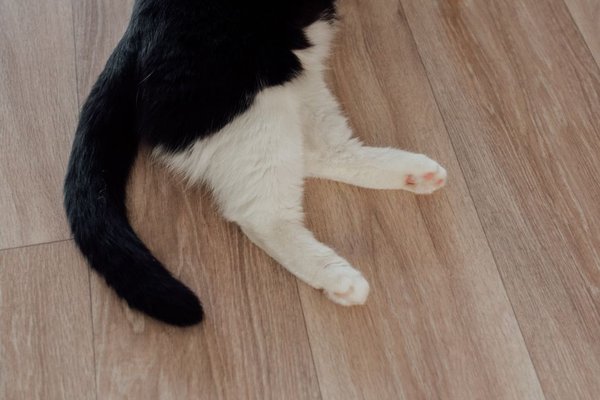
A cat walks into the room with its tail held high, then settles beside you and begins tapping the tip against the sofa. Has its mood changed? Possibly. Cat tail positions offer clues about friendliness, curiosity, fear and frustration, but the meaning depends on what the rest of the cat is doing. A tail is part of a conversation, not a stand-alone mood meter.
Learning cat tail language means noticing changes. Look at tail height, how loosely it moves and what happened immediately before the movement. Then check the ears, eyes and body posture.
What Common Cat Tail Positions May Mean
Tail straight up: a friendly approach
An upright, relaxed tail often appears when a confident cat approaches a familiar person or another cat. You might see it when your cat meets you at the door. If the body is loose and ears are neutral, it is generally a welcoming sign.
That does not guarantee the cat wants to be picked up. Offer a hand near its nose and let it choose whether to come closer. A high tail paired with a stiff body or puffed fur calls for a different interpretation.
Tail upright with a curved tip: relaxed interest
A gentle hook or question-mark shape at the end of an upright tail usually suggests a sociable, curious cat. This is one of the friendlier feline tail signals, especially when the cat is moving comfortably and choosing to approach.
Try a brief stroke around the cheeks or chin if your cat enjoys contact, then pause. Its response tells you more than the tail shape alone.
Tail level or hanging loosely: ordinary movement
Not every tail position communicates a strong emotion. A loosely extended or naturally lowered tail may simply accompany walking, exploring or resting. Some cats carry their tails differently because of their build or individual habits.
Compare your cat with its own usual posture rather than treating every low tail as distress. A relaxed face and unhurried movement matter.
Tail low or tucked underneath: caution or discomfort
A cat holding its tail unusually low, especially with its body crouched, may feel uncertain or frightened. A tightly tucked tail can indicate stronger fear or sometimes physical discomfort.
Imagine a visiting dog entering the hallway. Your cat lowers its head, flattens its ears and slips behind a chair with its tail tucked. Give the cat a clear escape route and a quiet place to retreat, rather than pulling it out for reassurance.
Tail puffed up: startled and trying to look bigger
When the fur stands out along the tail like a bottlebrush, the cat is highly aroused, often because something has frightened it. An arched back, sideways stance and flattened ears can make the message clearer.
Kittens sometimes produce the same dramatic silhouette during play. Check whether the exchange is loose and reciprocal or whether one cat is trapped, hissing or trying to escape. Give a frightened cat space rather than reaching for its tail.
Tail wrapped around someone: social contact
Some cats curl their tails around a familiar person’s leg or intertwine tails with a feline companion. In a calm encounter, this can be a friendly social gesture. A tail curled around the paws while resting, however, may simply be comfortable.
Tail Movements: Speed Changes the Message
Small tip twitches: attention, play or irritation
A flicking tail tip often appears when a cat watches birds or tracks a toy. It can also be an early sign that petting is becoming unwelcome. Notice the activity: hunting focus looks different from a cat whose skin twitches and ears turn sideways while being stroked.
Slow side-to-side swishing: concentration
A measured sweep can mean your cat is absorbed in something interesting, particularly before a pounce. Avoid interpreting every wag as happiness. Unlike a dog’s tail wag, a cat’s swish is not a universal invitation to interact.
Fast lashing or thumping: rising tension
Forceful movement, especially alongside a rigid body, flattened ears or a growl, often suggests frustration or agitation. If your cat begins thumping its tail against your lap after several strokes, stop touching it and allow it to leave. Respecting that early signal can prevent scratching.
Upright tail quivering: excitement or marking
A brief quiver as your cat greets you may accompany excitement. But a cat backing towards a wall with its tail vertical and trembling may be urine marking, particularly if it releases a small spray. The surrounding behaviour makes the difference.
Read the Whole Cat, Not Just the Tail
Cat communication combines several clues. A relaxed cat may show soft eyes, normal ear movement and an easy posture. A worried cat might crouch, widen its eyes, flatten its ears or freeze. Pupils also change with light, so they are not a perfect mood test.
Try a three-second check before approaching: notice the tail, look at the ears and shoulders, and ask what just changed in the room. Did a guest arrive? Did another cat block the doorway? Did play get too intense? Context turns vague cat mood cues into something you can act on.
For related reading, explore cat ear positions and their meanings, signs of stress in cats, and how to introduce two cats safely. These topics help explain signals that accompany tail movements.
When a Tail Change May Need Veterinary Attention
Behaviour can change with pain or illness. Seek veterinary advice if your cat suddenly holds its tail differently, cannot lift or move it, cries when touched, hides unusually, or develops a limp. A limp tail after an accident, especially with difficulty urinating or walking, needs prompt veterinary assessment. Do not manipulate an injured tail.
Frequently Asked Questions
Why does my cat hold its tail straight up when it sees me?
A loose, upright tail commonly accompanies a confident, friendly greeting. Check that the rest of the body looks relaxed before inviting interaction.
Does a wagging cat tail mean happiness?
Not necessarily. Slow movement may reflect concentration, while hard lashing can signal irritation. Speed, tension and situation matter.
Why does my cat’s tail puff up during play?
Excitement and sudden surprises can puff the fur during play, especially in kittens. If another cat looks frightened or cannot escape, interrupt the encounter calmly and give both space.
Should I worry if my cat’s tail stays down?
A naturally low tail is not automatically a problem. Worry more about a sudden change, a tightly tucked tail with fearful behaviour, or signs of injury or pain.
Understanding Your Cat’s Signals Over Time
Cat tail positions are most useful when you observe patterns in your own pet. An upright greeting, a focused tip twitch and a warning thump may look similar from across the room but tell different stories. Let posture and situation guide your response. A little observation, and willingness to give space when requested, can make everyday interactions calmer for both of you.
