

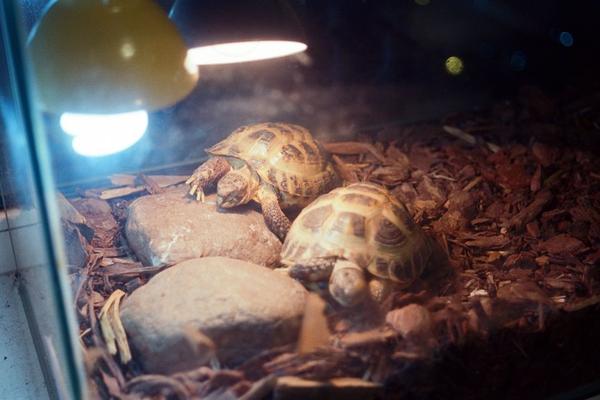
A good turtle tank setup needs more than water and a decorative rock. Aquatic turtles require room to swim, powerful filtration, a dry basking platform, suitable temperatures, and ultraviolet lighting. If any component is undersized or misplaced, keeping the habitat healthy becomes harder.
Plan around your turtle’s adult size and daily routine: swimming, resting, basking, and returning to clean water. Sliders, painted turtles, musk turtles, and other aquatic species have different needs, so confirm the species before buying equipment.
Choose a Tank With Room to Grow
Hatchlings make small aquariums look spacious, but many turtles grow rapidly. For active species such as sliders, approximately 10 US gallons of enclosure capacity per inch of shell length is a useful planning guide. An 8-inch turtle, for example, may need around 80 gallons or more. This is not a universal rule; adult size, shell shape, and swimming ability matter.
A longer, wider aquarium generally offers more usable swimming space than a tall, narrow one. Generous water volume also helps dilute waste. Buying with adult size in mind can prevent repeated, expensive upgrades.
How Deep Should the Water Be?
Strong swimmers often benefit from water around two to three times their shell length in depth. Hatchlings and bottom-walking species may need shallower resting areas and easy access to the surface. Provide a secure, ventilated cover: turtles are surprisingly capable climbers, especially near basking ramps.
Choose a Turtle Tank Filter for Heavy Waste
A turtle aquarium setup generally needs stronger filtration than a lightly stocked fish tank. A substantial external canister filter is often practical because it holds generous mechanical and biological media.
Mechanical media capture debris. Beneficial bacteria living on biological media convert toxic ammonia into nitrite and then nitrate. Choose a turtle tank filter based on water volume, waste load, media capacity, and maintenance access, not just the manufacturer’s tank-size label.
Protect filter intakes against entrapment and avoid currents that make resting difficult. Rinse reusable biological media in discarded tank water, rather than untreated tap water. A separate turtle filter maintenance guide can explain media care in greater depth.
Give Your Turtle a Completely Dry Basking Area
A turtle basking area should support the animal’s entire weight without tipping or sinking. Use a sturdy dock or above-tank platform with an accessible, grippy ramp. The turtle must be able to climb fully out of the water and dry both its shell and underside.
For many sliders, a basking surface around 30–35°C (86–95°F) is suitable, though requirements vary by species. Check the actual surface temperature with a thermometer instead of guessing from bulb wattage. Keep the lamp secure, prevent contact with hot fittings, and provide cooler places where the turtle can retreat.
Position Heat and UVB Lighting Properly
A basking heat lamp and a turtle UVB light do different jobs. Heat helps regulate body temperature, while UVB supports vitamin D3 production and calcium metabolism. Regular household bulbs are not an adequate UVB source.
Place a suitable reptile UVB fixture over the basking platform at the manufacturer-recommended distance. Consider reflectors and mesh screens; glass and acrylic block much of the useful UVB. Provide shaded areas and replace the lamp according to its output and manufacturer guidance, even if it still glows.
For many commonly kept turtles, roughly 10–12 hours of daytime lighting provides a consistent schedule. Use a timer and switch basking lights off overnight. A reptile UVB lighting guide can help with fixture selection and placement.
Check Water Temperature Separately
Many indoor sliders do well with water in the low-to-mid 20s Celsius, with younger animals often requiring the warmer end. Other species differ. If necessary, use a guarded aquarium heater with a thermostat and verify temperatures using a separate waterproof thermometer.
Keep Substrate and Decorations Simple
A bare aquarium bottom is easy to inspect and clean. Fine sand may suit some turtles but requires regular siphoning. Avoid small gravel that could be swallowed; larger smooth stones must be secured against shifting.
Add stable resting spots and hiding opportunities without sacrificing swimming room. Check for sharp edges, loose decorations, and gaps where a turtle could become trapped. Choose aquatic plants that are safe for the species if eaten.
Cycle the Aquarium Before Your Turtle Arrives
Fill the tank with appropriately dechlorinated water. Run the filter, heater, and lights beforehand to check for leaks, unsafe currents, and incorrect temperatures. Beneficial filter bacteria can take several weeks to establish; one day of filter operation does not create a mature nitrogen cycle.
Test ammonia, nitrite, and nitrate. Ammonia and nitrite should remain at zero in an established aquarium. If they rise, increase testing and perform appropriate partial water changes. Understanding the aquarium nitrogen cycle helps prevent recurring water-quality problems.
Test the Complete Setup With a Practical Scenario
Imagine preparing a larger tank for a growing red-eared slider. Fill it to the intended level, then inspect the basking ramp. Can the turtle reach the dry platform without gaining access to the tank rim? Does the platform remain stable?
Now switch on the filter and check that water flow does not overwhelm resting areas. Measure water and basking temperatures independently. Finally, confirm that UVB reaches the dock without passing through glass. This short rehearsal can reveal problems before the turtle moves in.
Maintain Water Quality, Not Just Clear Water
Remove uneaten food and visible waste promptly. Test the water regularly, especially in a newly established aquarium. Weekly partial changes of roughly 20% may be a starting point for many mature systems, but actual needs depend on test results and waste production. Condition new tap water appropriately.
Clear blocked intakes and clean mechanical media without discarding all beneficial bacteria. Keep a record of water tests, temperature readings, and UVB replacement dates. Wash your hands after handling turtles or their equipment; reptiles can carry Salmonella.
Frequently Asked Questions
Can aquatic turtles live in a normal fish tank?
Yes, if it is suitably large and secure, with adequate filtration, an accessible dry basking platform, and appropriate heat and UVB lighting.
Do turtles need to leave the water completely?
Most commonly kept basking species do. Their dry platform should allow their entire body to warm and dry comfortably. Check specific requirements for your species.
Can a filter replace water changes?
No. Filters process some waste, but nitrate and other dissolved substances accumulate. Testing, partial water changes, and debris removal remain essential.
Is sunlight through a window enough for UVB?
No. Ordinary window glass blocks much of the relevant UVB. Indoor turtles usually require correctly positioned reptile UVB lighting.
Build for Long-Term Care
The most successful turtle tank setup is spacious, stable, species-appropriate, and easy to maintain. Prioritise swimming room, dependable filtration, a completely dry basking area, correct temperatures, and effective UVB exposure. As your turtle grows, revisit its space and equipment, and let water tests guide your cleaning routine.
