

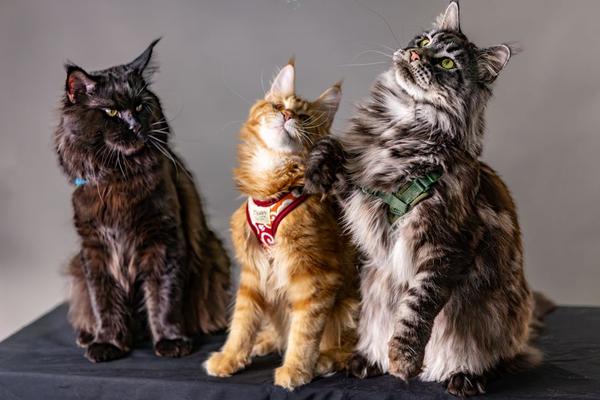
Maine Coons are hard to overlook: enormous paws, tufted ears, a flowing tail, and a calm presence that can make an ordinary house cat seem surprisingly small. Yet size is only part of their appeal. This American longhaired breed is also known for being social, playful, and unusually interested in whatever its people are doing. A useful Maine Coon cat breed guide should therefore explain not just how impressive they look, but what daily life with one is actually like.
What Makes a Maine Coon Distinctive?
The Maine Coon developed as a hardy working cat in the northeastern United States, and its build still reflects that background. Adults have a long, rectangular body, substantial bone, a broad chest, large paws, tufted ears, and a shaggy coat that becomes longer around the stomach, hindquarters, and tail.
They are one of the largest pedigreed domestic cat breeds, but healthy Maine Coons should look powerful and athletic rather than simply heavy. That distinction matters because dramatic photos online can create unrealistic expectations about how large every individual will become.
Maine Coon Size and Growth
Maine Coon size varies by sex, genetics, body condition, and individual development. The International Cat Association lists adult females at roughly 12 to 15 pounds and adult males commonly around 18 to 22 pounds. Some healthy cats fall outside those ranges, so weight alone should not be used to judge whether a Maine Coon is thriving.
This is also a slow-maturing breed. Maine Coons may keep filling out for several years, often reaching full physical maturity later than many other cats. A lanky one-year-old can still have considerable muscular development ahead.
Owners should track body condition rather than chase a target number on the scale. You should generally be able to feel the ribs with light pressure, and your veterinarian can show you how to use a feline body-condition score. Because this is a large cat breed, overfeeding a growing kitten in an attempt to make it “bigger” is not a healthy strategy.
What Is the Maine Coon Temperament Like?
Maine Coon temperament is usually described as gentle, sociable, and easygoing. Many follow family members from room to room, supervise household jobs, and join play without demanding constant lap time. They are often intelligent and curious, and some learn games such as fetch or become comfortable with harness training.
Many communicate with chirps, trills, and softer sounds as well as ordinary meows. Their social nature can suit homes with respectful children, other cats, or cat-friendly dogs when introductions are gradual.
Breed tendencies are not guarantees. Early socialization, health, life experiences, and individual personality all shape adult behavior. If you specifically want a cuddly lap cat, meet the individual animal rather than relying only on the breed’s friendly reputation.
Coat Care and Grooming
The Maine Coon coat is long and shaggy, so regular combing is important. Tangles can form behind the ears, under the front legs, along the belly, and around the hindquarters. The Cat Fanciers’ Association recommends combing two or three times a week to control shedding and help prevent matting.
Keep a wide-tooth comb near the place your cat already relaxes. Spend five minutes checking one area at a time instead of waiting for a long grooming session. If you find a tight mat close to the skin, ask a groomer or veterinarian for help rather than cutting it with scissors. Nail trimming, dental care, and ear checks belong in the same care plan.
Exercise, Enrichment, and Home Setup
Maine Coons can remain playful well into adulthood. Their size makes sturdy equipment important: a narrow scratching post or lightweight cat tree that works for a smaller cat may wobble under a mature Maine Coon. Choose broad bases, large resting platforms, and scratching surfaces long enough for a full-body stretch.
Interactive wand toys, food puzzles, climbing opportunities, and short training sessions provide mental and physical stimulation. Many Maine Coons enjoy social play, so rotating activities with their people can be especially effective.
Health Considerations
Maine Coons can be healthy, active companions, but the breed has inherited health concerns worth understanding. Hypertrophic cardiomyopathy, or HCM, is the most common heart disease in cats and has a recognized genetic component in some Maine Coon lines. It causes thickening of the heart muscle and may not produce obvious signs early on.
Spinal muscular atrophy, or SMA, is another inherited condition documented in Maine Coons. It affects motor neurons and can cause weakness and an abnormal gait beginning in kittenhood. DNA testing can identify affected cats and carriers for the known Maine Coon SMA variant, making it useful in responsible breeding programs.
When buying a kitten, ask what health screening is performed on the parents and request documentation. For any Maine Coon, veterinary exams, dental care, parasite prevention, appropriate vaccination, and weight management remain the foundation of preventive care.
Maine Coon Lifespan
Maine Coon lifespan varies with genetics, preventive care, environment, nutrition, and individual health. TICA lists life expectancy at 12.5 years or more, and many well-cared-for cats live into their teens. There is no single age that predicts how long an individual cat will live.
Keeping a Maine Coon indoors or providing secure outdoor access, maintaining healthy body condition, scheduling veterinary checkups, and responding promptly to changes in breathing, mobility, appetite, or behavior can support long-term wellbeing.
Is a Maine Coon Right for You?
A Maine Coon can be an excellent companion for someone who wants a social, interactive cat and is prepared for the practical realities of a large body and long coat. Expect more fur, larger litter boxes and carriers, sturdier furniture, and a cat that may mature slowly. In return, many owners enjoy a playful, good-natured companion that stays involved in family life without being overwhelmingly demanding.
Frequently Asked Questions
How big do Maine Coon cats get?
Adult males are commonly larger than females. TICA lists males around 18 to 22 pounds and females around 12 to 15 pounds, although healthy individuals can be smaller or larger. Body condition matters more than reaching a particular weight.
Are Maine Coons good family cats?
Many are friendly, gentle, and comfortable in active households. They often get along well with respectful children and other pets, but careful introductions and individual temperament still matter.
How often should a Maine Coon be groomed?
Combing two or three times per week is a useful baseline for many Maine Coons. Cats that shed heavily or develop tangles easily may need more frequent attention.
Do Maine Coons need special food?
They do not require a breed-specific diet simply because they are Maine Coons. Feed a complete and balanced food appropriate for the cat’s life stage and adjust portions to maintain healthy body condition. Your veterinarian can recommend changes for kittens, seniors, or cats with medical needs.
Living Well With a Maine Coon
The best way to approach this breed is to appreciate the whole cat rather than focusing on record-breaking size. Maine Coons are slow-maturing, social, athletic animals that benefit from regular grooming, thoughtful enrichment, preventive veterinary care, and weight control. For owners who can meet those needs, their mix of intelligence, gentleness, and playful companionship explains their enduring popularity.
