

A red fox crossing a field at dusk may look like a solitary wanderer. Yet its movements belong to a wider pattern of hunting routes, scent-marked boundaries, food stores and family connections. Red fox behavior is especially interesting because these adaptable canids can live in woodland, farmland and busy cities without following the same social rules as wolves.
How Red Foxes Hunt
Red foxes are opportunistic omnivores. Depending on the habitat and season, they eat mice, voles, rabbits, birds, insects, earthworms, fruit and carrion. Urban foxes may also scavenge discarded human food. Their flexibility matters more than any single preferred prey.
Listening Before Pouncing
One of the clearest examples of fox hunting behavior is the high pounce used against small mammals. A fox may stop, tilt its head and listen for movement beneath vegetation or snow. It then springs upward and lands with its front feet directed toward the suspected prey. Keen hearing helps locate animals that remain almost invisible.
Not every hunt looks dramatic. Foxes also stalk, chase, dig and search methodically along hedges or field margins. When prey is plentiful, a short hunting trip may provide several meals; at other times, the fox must travel farther and switch foods.
Why Foxes Hide Food
A fox sometimes catches more than it can immediately eat. It may bury part of a meal in shallow soil or cover it with leaves, creating a food cache. Later, the animal can return to these stores, using memory and smell to help relocate them. Caching helps bridge the gap between successful hunts and leaner periods.
Fox Communication: More Than Screams
Fox communication uses sound, scent and body language. Barks can serve as contact or warning calls, while whines and softer sounds occur during close interactions. The sharp, eerie calls commonly associated with foxes are particularly noticeable around the breeding season. A nighttime scream is not, by itself, evidence of injury.
Scent Messages Along Familiar Routes
Urine and droppings leave chemical information where other foxes may detect it. Animals often mark conspicuous objects or repeatedly used paths. These signals help communicate presence, territory use and reproductive condition without requiring two foxes to meet face to face.
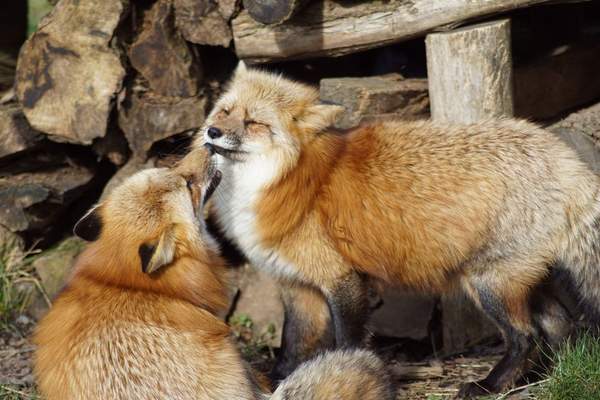
Posture adds another layer. A cautious fox may flatten its ears or lower its body, while a confident animal can stand more upright. Playful pups use exaggerated movement and brief chases as they learn to interact. Reading one gesture in isolation, however, can be misleading.
Territories and Social Relationships
Red foxes generally hunt alone rather than cooperating in packs. That does not mean they lack social lives. A breeding pair may share a territory, and in some populations additional adults occupy the same area. Research on urban foxes has found stable associations between certain neighbors or group members alongside clear avoidance of others.
Territory size varies widely with food, shelter, population density and season. A fox living among productive gardens may use a smaller area than one roaming open countryside. Established paths link resting places, hunting spots, marking points and occasional food stores. Comparisons with gray wolf behavior and coyote social behavior show how differently related canids organize daily life.
What a Red Fox Den Is Used For
A red fox den, sometimes called an earth, is particularly important for raising young. Foxes may dig burrows, enlarge holes made by other mammals or shelter beneath suitable structures. A territory can contain several den sites, and families may move pups if a location becomes unsuitable.
Contrary to the idea that foxes always sleep underground, adults commonly rest above ground in protected vegetation or other sheltered spots. Den occupation is especially noticeable during the breeding and pup-rearing period, not necessarily throughout the year.
Fox Family Life and Pup Development
In many temperate regions, mating takes place in winter and pups are born in spring after a pregnancy lasting roughly seven and a half weeks. Litters commonly contain several pups, although numbers vary. Newborns remain dependent on the mother, and adults bring food to the den as the young develop.
As pups emerge, their world expands from the den entrance to nearby play areas. Wrestling, chasing and investigating objects are more than entertainment: these activities help build coordination and social skills. The young gradually begin eating solid food and practising hunting movements.
Fox family life is flexible. Both parents may contribute to feeding the litter, and in some groups other adults help. Young foxes become increasingly independent through summer and often disperse during autumn or later, though timing differs across populations.
How Behavior Changes With the Seasons
Winter and Spring
Winter brings mating activity and sometimes more audible calls or territorial movement. Spring shifts attention toward dens, nursing pups and repeated food deliveries. A fox making frequent trips along the same route may be supplying a family rather than simply patrolling.
Summer and Autumn
Summer pups explore farther and practise finding food. By autumn, many juveniles move away to seek their own living areas, while adults continue hunting and storing food where opportunities arise. These seasonal rhythms vary with climate and local conditions.
Watching a Fox Without Disturbing It
Suppose a fox repeatedly visits the same garden corner each evening in spring. From a distance, look for patterns: is it scent-marking a post, listening for prey or carrying food away? These clues can reveal more than a single photograph. Observe quietly, keep pets away and avoid following the animal toward a possible den.
Do not feed wild foxes or approach pups. If young foxes are seen alone, adults may simply be hunting nearby. Disturbance can interrupt normal care. Learning about wild canid adaptations is most rewarding when the animals remain free to behave naturally.
Frequently Asked Questions
Are red foxes solitary or social?
They usually forage alone, but may maintain breeding pairs, family relationships or small social groups. Their social organization changes with local population density and available resources.
Why do red foxes scream at night?
High-pitched calls are part of normal communication, especially during the mating period. They can sound alarming, but do not automatically indicate fighting or distress.
Do red foxes use the same den all year?
Not necessarily. Dens are especially useful while raising pups. At other times, foxes frequently rest above ground and may have several alternative shelter sites.
Is a daytime fox sighting unusual?
No. Although activity often peaks near dusk and dawn, healthy foxes can hunt, travel and feed young during daylight. Behavior and condition provide better clues than the hour alone.
Understanding the Pattern
The most revealing thing about red fox behavior is how its pieces fit together. A hunting route becomes a marking route; a successful catch may become stored food or a meal for pups; familiar den sites anchor family activity for part of the year. Watch those connections, and the fox stops looking like a mysterious visitor and starts looking like an animal making practical decisions in a changing landscape.
