

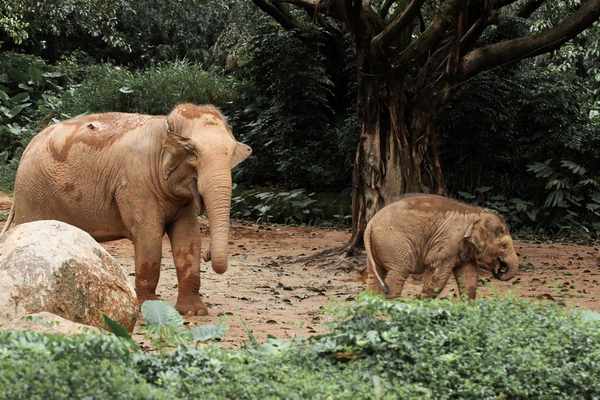
At first glance, an elephant is unmistakable. But identifying an African elephant versus an Asian elephant takes more than noticing a trunk and huge feet. Ear shape, head profile, tusks and even the tip of the trunk offer clues. The trick is to use several features together rather than trusting a single photograph.
Three Living Elephant Species, Not Just Two
The African savanna elephant (Loxodonta africana) is the familiar giant of open grasslands and woodlands. The African forest elephant (Loxodonta cyclotis) lives primarily in dense tropical forests and is generally smaller, with rounder ears and straighter tusks.
The Asian elephant (Elephas maximus) belongs to a different genus and ranges across parts of South and Southeast Asia. It is the only surviving species in its genus. When people discuss African elephant differences, they usually picture the savanna species, so comparisons can become misleading if forest elephants are ignored.
Elephant Size Comparison: Which Is Bigger?
The African savanna elephant is the largest living land animal. Adult bulls commonly stand around 3 to 4 metres at the shoulder and can weigh several tonnes, with particularly large individuals exceeding six tonnes. Females are smaller.
Asian elephants are generally shorter and lighter than African savanna elephants. Adult males often stand roughly 2.5 to 3.2 metres at the shoulder, although size varies across individuals and populations. African forest elephants are smaller than savanna elephants, and their size overlaps more with that of Asian elephants.
Ears, Head Shape and Skin: The Most Visible Clues
Ear Size and Shape
African savanna elephants have enormous, fan-shaped ears extending well beyond the sides of their heads. These ears help release body heat in hot environments. African forest elephants have smaller, more rounded ears, though they still differ from those of Asian elephants.
Asian elephants have noticeably smaller ears relative to their heads. In a clear side-view photograph, this is often the quickest identification clue. Yet an ear folded backward or partly hidden by vegetation can distort its apparent size.
Forehead and Back Profile
Asian elephants typically have a distinctive double-domed forehead, with a depression between the two rounded areas. African elephants generally show a smoother, more sloping forehead profile. The Asian elephant’s back often appears arched, whereas a savanna elephant may show a more hollow or saddle-shaped outline.
African elephants also tend to have more deeply wrinkled skin, while Asian elephants can appear comparatively smoother and may show patches of depigmented skin on the face, ears or trunk. Neither skin texture nor colour alone is a dependable test.
The Trunk Tip Has a Hidden Difference
Look closely at the end of the trunk. African elephants have two opposing, finger-like projections that help grip small objects. Asian elephants have one prominent finger-like projection on the upper side of the tip and use a different grasping motion.
Both groups use their trunks to smell, explore, feed, communicate and draw up water before transferring it to the mouth. This close-up feature can settle an identification when the ears are not visible, but it is rarely practical in a distant wildlife sighting.
Tusks: Why “African Elephants Have Them” Is Too Simple
Tusks are elongated upper incisor teeth, not horns. Many male and female African elephants grow visible tusks, although some individuals are naturally tuskless. Tusklessness can be especially common in populations affected by historical ivory poaching.
Among Asian elephants, long, conspicuous tusks occur mainly in some males. Other males are tuskless, and females usually lack large visible tusks, though they may have small tusk-like teeth called tushes. That makes tusks a useful supporting clue, not a guaranteed way to distinguish elephant species.
Where African and Asian Elephants Live
African savanna elephants occupy varied landscapes across sub-Saharan Africa, including grasslands, scrub and woodlands. African forest elephants inhabit tropical forests in Central and parts of West Africa, where they move through thick vegetation and disperse seeds.
Asian elephants live in fragmented habitats across 13 range countries in South and Southeast Asia. They use forests, grasslands and forest edges, often following seasonal routes between feeding areas and water sources. Their wild ranges do not naturally overlap with those of African elephants.
Diet also reflects habitat. Savanna elephants graze and browse; forest elephants eat considerable quantities of fruit; Asian elephants feed on grasses, leaves and bark according to local conditions. Exploring elephant habitats helps explain this variety.
Are Their Behaviours Different?
Both African and Asian elephants are intelligent, social mammals. Females and calves typically live in family groups guided by experienced older females, while adult males often spend substantial time apart. They communicate through touch, scent, vocalisations and low-frequency sounds.
Large gatherings of savanna elephants occur near water, while forest elephants are often seen in smaller groups. Asian herds vary too. Neither continent’s elephants are inherently smarter or friendlier based on these patterns.
How to Identify an Elephant in a Photo
Imagine a photograph showing an elephant standing side-on with its head raised. Start with the ears: very large, broad ears suggest an African savanna elephant. Then check the forehead for two rounded domes, which favour an Asian elephant. If the trunk tip is visible, two gripping projections support an African identification; one prominent upper projection supports an Asian one.
Finally, look at where the photograph was taken. An elephant in a Central African rainforest could be an African forest elephant, whose smaller ears and body make the usual savanna-versus-Asia shortcuts less reliable. Comparing mammal adaptations across habitats is another useful way to understand these traits.
Conservation Status and Threats
The IUCN Red List assesses African savanna elephants as Endangered, African forest elephants as Critically Endangered, and Asian elephants as Endangered. These are separate assessments, not one shared status for all elephants.
Ivory poaching remains a major threat to African elephants, while habitat loss, fragmented migration routes and conflict with people place heavy pressure on Asian populations. Both regions face multiple overlapping threats. Protecting connected landscapes and reducing dangerous encounters with communities are central to elephant conservation.
Frequently Asked Questions
Are African elephants always bigger than Asian elephants?
No. African savanna elephants are larger on average, but individual sizes overlap, particularly when age, sex and African forest elephants are considered.
Which elephant has bigger ears?
African savanna elephants generally have the largest ears. African forest elephants have smaller, rounder ears, while Asian elephants have smaller ears relative to their head size.
Do female Asian elephants have tusks?
Female Asian elephants usually do not develop long, visible tusks. Some possess small tushes, while some male Asian elephants also lack prominent tusks.
How many elephant species are alive today?
Scientists currently recognise three living species: the African savanna elephant, African forest elephant and Asian elephant.
Final Thoughts
The clearest African elephant versus Asian elephant comparison combines ears, head shape, trunk tip, tusks and location. Remember the third species, the African forest elephant, before making a judgement from size alone. Together, these clues make identification more accurate.
