

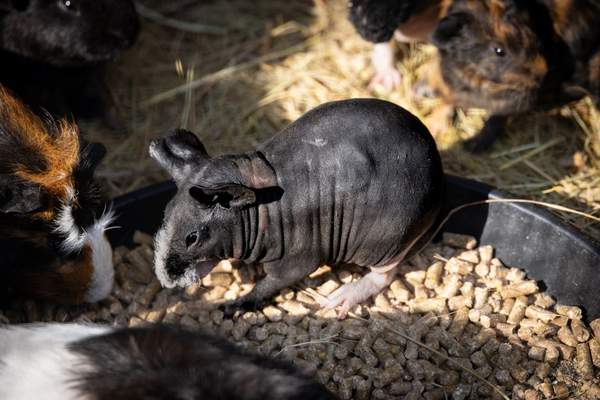
Guinea pigs have an unusual nutritional requirement that shapes their daily feeding routine: unlike most mammals, they cannot make their own vitamin C. Every guinea pig therefore needs a reliable dietary supply each day. If intake stays too low, vitamin C deficiency, or guinea pig scurvy, can affect the joints, gums, skin, blood vessels, appetite, and general health.
For a healthy adult, veterinary guidance generally places the daily requirement at about 10 to 25 mg of vitamin C per kilogram of body weight. Growing, pregnant, lactating, or ill guinea pigs may need around 30 mg/kg per day or more. A guinea pig weighing about 1 kg therefore needs roughly 10 to 25 mg daily for routine maintenance. Higher-dose supplementation should be discussed with an exotics veterinarian rather than guessed at home.
Why Guinea Pigs Need Vitamin C Every Day
Guinea pigs lack a functional form of the enzyme needed to produce vitamin C from glucose. Because they cannot manufacture enough themselves, the nutrient has to come from food. Vitamin C supports collagen formation, which is essential for healthy connective tissue, blood vessels, skin, joints, gums, and structures that support the teeth.
How Much Vitamin C Does a Guinea Pig Need?
A useful baseline for a healthy adult is 10 to 25 mg/kg each day. Young guinea pigs that are still growing, pregnant or nursing females, and animals recovering from illness can have higher needs, commonly around 30 mg/kg per day or more.
Body weight matters. A healthy 900 g adult may need roughly 9 to 22.5 mg daily, while a 1.2 kg adult may need around 12 to 30 mg. These figures are nutritional ranges, not treatment doses. If a guinea pig is sick, losing weight, pregnant, or showing signs of deficiency, a veterinarian should advise on supplementation.
Best Vitamin C Foods for Guinea Pigs
Fresh vegetables are one of the most practical ways to supply vitamin C while adding variety and moisture to a guinea pig diet. Bell peppers are especially useful because they provide plenty of vitamin C without the high sugar content of fruit. Red and green peppers can be offered as part of the daily vegetable portion.
Other vitamin C foods for guinea pigs include broccoli, kale, parsley, turnip greens, and similar leafy vegetables. Variety matters. Kale and parsley are nutritious but relatively high in calcium, so they are better rotated rather than used as the only daily source, particularly for adult guinea pigs with a history of urinary problems.
Fruit also contains vitamin C, but it should not become the main strategy. Oranges and strawberries can be occasional treats, yet their sugar content makes vegetables a better everyday choice.
A Practical Daily Example
Consider a healthy adult guinea pig weighing about 1 kg. Its day should revolve around unlimited grass hay, a measured portion of fresh guinea pig pellets, and varied vegetables. Including bell pepper with leafy greens gives a dependable natural vitamin C source without turning every meal into a precise calculation. Monitor body weight, appetite, and overall condition so changes are noticed early.
For broader feeding information, a guinea pig diet guide can explain how hay, vegetables, pellets, and treats fit together, while a best hay for guinea pigs guide can cover fibre and dental health.
Can Guinea Pig Pellets Supply Enough Vitamin C?
Quality guinea pig pellets are usually fortified with vitamin C, but the nutrient is not completely stable. It breaks down over time and is affected by heat, light, and moisture. An old bag may therefore provide less usable vitamin C than it did when manufactured.
Choose plain pellets made specifically for guinea pigs rather than rabbit pellets or seed-heavy mixes. Store them in a cool, dry place, seal the package properly, and buy quantities that will be used while fresh. Veterinary guidance commonly advises replacing pellets within about 90 days of manufacture because vitamin C content declines during storage. A guinea pig pellet guide can also help owners compare appropriate formulations.
Should You Put Vitamin C in Drinking Water?
Vitamin C drops in a water bottle are generally not recommended. Vitamin C degrades rapidly in water, making the dose unreliable, and supplements can change the taste enough to reduce drinking. Fresh, plain water should remain available at all times.
If a veterinarian recommends extra vitamin C, a measured oral product intended for guinea pigs is usually more predictable than dosing the water. Avoid random multivitamin products because they may add nutrients your guinea pig does not need.
Signs of Guinea Pig Scurvy
Possible signs of deficiency include reduced appetite, weight loss, weakness, a rough coat, swollen or painful joints, reluctance to walk, sore or bleeding gums, bruising or bleeding, diarrhea, and dental problems.
These symptoms can also occur with other illnesses, so they should not be used to diagnose scurvy at home. Guinea pigs can deteriorate quickly when they stop eating. If your pet is lethargic, painful, losing weight, struggling to walk, bleeding, or refusing food, contact a veterinarian experienced with guinea pigs promptly.
How to Prevent Vitamin C Deficiency
Consistency matters more than occasional large doses. Keep unlimited grass hay available, feed fresh guinea-pig-specific pellets, and offer varied vegetables that regularly include a reliable vitamin C source such as bell pepper. Introduce diet changes gradually and weigh your guinea pig routinely.
In multi-guinea-pig homes, watch each animal eat. A shy guinea pig may be pushed away from the best vegetables by a more confident cage mate. Offering vitamin C-rich foods in several places can help every animal get access.
Frequently Asked Questions
How much vitamin C should a guinea pig get each day?
Healthy adults generally need about 10 to 25 mg/kg per day. Growing, pregnant, lactating, or ill guinea pigs may require around 30 mg/kg daily or more. An exotics veterinarian can advise on individual needs.
What is the best everyday source of vitamin C for guinea pigs?
Bell pepper is one of the most practical fresh choices because it is rich in vitamin C and relatively low in sugar. It works best as part of a varied vegetable rotation alongside fresh pellets and unlimited grass hay.
Can guinea pigs get enough vitamin C from pellets alone?
Fresh fortified pellets contribute vitamin C, but the nutrient degrades during storage. Using fresh pellets together with vitamin C-rich vegetables creates a more dependable routine than relying on pellets alone.
Can I give human vitamin C tablets to my guinea pig?
Avoid flavored, fizzy, chewable, or multivitamin human products unless a veterinarian specifically recommends one. If extra vitamin C is needed, use a suitable product and dose that can be measured accurately.
Keeping Vitamin C Simple and Reliable
Meeting guinea pig vitamin C requirements does not require complicated meal calculations. Build a dependable daily routine around fresh hay, appropriate pellets, varied vegetables, and a regular vitamin C-rich food. Keep pellets fresh, avoid relying on vitamin C in drinking water, and respond quickly to appetite changes or possible scurvy symptoms. That approach supports both vitamin C intake and the wider nutritional needs that keep guinea pigs healthy.
