

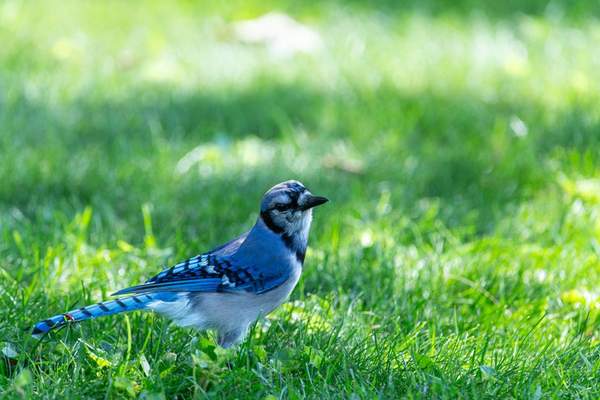
Backyard bird identification gets easier when you stop trying to recognize a species from one memorable feature. A flash of red, a striped breast, or a pointed bill can help, but one clue can mislead in poor light, during molt, or with females and juveniles. A better method is to build an identification from several clues that agree.
The routine is simple: notice size and shape first, then bill shape, color pattern, movement, habitat, and sound. Once you have those basics, smaller bird field marks such as wing bars, eye rings, breast streaks, or tail patterns become much more meaningful.
Start With Size and Silhouette
Before focusing on color, look at the bird as a shape. Is it tiny and compact, robin-sized, crow-sized, or larger? If another familiar bird is nearby, use it as a reference. Relative size is usually more reliable than trying to estimate exact measurements from a distance.
Then study proportions. A bird may look round-bodied with a short tail, slim with a long tail, large-headed, or broad-winged. Notice whether it sits upright or horizontally. These structural clues often narrow the possibilities faster than plumage.
Use the Bill as a Shortcut to Bird Type
Bill shape often hints at how a bird feeds. A short, thick, cone-shaped bill is common among many seed eaters, while a thin, pointed bill suits birds that pick insects from leaves or bark. Longer bills may be used for probing, and hooked bills are associated with birds of prey.
Do not treat bill shape as a complete identification. Use it to place the bird into a smaller group. One useful bird identification tip is to compare the bill with the head: is it short and delicate, deep and heavy, or noticeably long?
Read Color as a Pattern, Not a Paint Sample
Lighting can change color dramatically. A bright bird in shade may look dull, and backlighting can reduce almost any bird to a dark silhouette. Instead of asking only what color the bird is, ask where the light and dark areas occur.
Look for a dark cap, pale eyebrow, eye line, throat patch, streaked breast, wing bars, white outer tail feathers, or a contrasting rump. Also notice what is missing. When you identify birds by sight, color placement is often more useful than exact shade.
Watch How the Bird Moves
Behavior can quickly shorten a long list of possibilities. Does the bird hop or walk on the ground? Does it climb a tree trunk, hang beneath twigs, hover briefly, or fly out from a perch to catch insects and return?
Notice tail and wing movements too. Some birds flick, wag, fan, or pump the tail repeatedly. Feeding style also matters: a bird cracking seeds at a feeder gives you a different set of candidates from one probing lawn soil or searching under leaves.
Use Habitat, Location, and Season as Evidence
Your yard is not one habitat. A lawn, dense hedge, mature tree, flower bed, pond edge, and feeder station can attract different birds. Record exactly where the bird was. A species that favors open ground may be less likely deep inside dense foliage.
Season matters because many birds migrate or shift range during the year. A good backyard bird guide should therefore be used together with your location and date. Habitat and season do not prove an identification, but they can make one option much more plausible than another.
Listen Before the Bird Disappears
Sound can confirm a bird you only glimpse. Try to describe the sound before checking an app or recording: was it a whistle, trill, buzz, chatter, repeated two-note call, or sharp chip? Notice rhythm, pitch, and repetition.
Calls can vary by region, season, age, and context, so avoid relying on sound alone. Combined with size, shape, behavior, and habitat, a distinctive call can strengthen an identification.
A Practical Backyard Identification Example
Imagine a small brown bird lands beneath your feeder. Instead of deciding “sparrow” immediately, work through the clues. It is smaller than a robin, compact, with a short conical bill. It spends most of its time on the ground, hopping and scratching among spilled seed. Its back is brown and streaked, and its breast also shows streaking.
Now you have a useful description even if the bird flies away. Compare that combination with local species rather than every brown bird in a guide. Add any face pattern, breast spot, wing bars, or call you noticed. The goal is to collect enough independent clues that only a few reasonable choices remain.
Build a Repeatable Identification Routine
When a new bird appears, mentally run through the same sequence: size, shape, bill, color pattern, behavior, habitat, and sound. If time is short, prioritize shape and behavior before tiny markings. Once the bird is gone, write down what you saw before checking photos so a guide image does not reshape your memory.
A blurry photo can preserve posture, tail length, wing pattern, or bill shape. Short notes will also reveal which features you tend to overlook.
Useful next topics include common backyard birds, bird feeder placement, and how to recognize bird songs. Each builds the same observation skills and can make future identifications faster.
Common Mistakes That Lead to Wrong Identifications
A common mistake is trusting color too much. Another is choosing a species because one feature matches while ignoring several that do not. Guide photos may also emphasize breeding males more than females, juveniles, or seasonal plumages.
Be comfortable leaving an identification at “sparrow,” “woodpecker,” or another broader group when the evidence is incomplete. Accurate birdwatching includes knowing when you did not see enough to be certain.
Frequently Asked Questions
What are the best field marks for identifying backyard birds?
Start with overall size and shape, bill structure, color pattern, and posture. Then look for finer marks such as eye rings, wing bars, breast streaks, throat patches, tail markings, or crests. The best field marks are the ones that clearly separate your bird from similar local species.
Should I identify a bird by color first?
Usually not. Color changes with lighting, feather wear, age, and sex. Shape, proportions, bill type, behavior, and habitat often provide stronger early clues. Use color pattern as part of a group of matching features.
Can bird sounds identify a species without seeing it?
Sometimes, especially when a call or song is distinctive. For beginners, sound is safest as supporting evidence because similar species can produce confusing notes. Pair the sound with location, habitat, season, and any visual clues you have.
What should I do if two species look almost identical?
Compare the features that differ rather than the features they share. Check bill proportions, face pattern, wing and tail marks, behavior, habitat, season, and vocalizations. If the decisive feature was not visible, record the bird as uncertain instead of forcing a species-level identification.
Conclusion
Learning how to identify backyard birds is less about memorizing hundreds of pictures and more about developing a reliable observation habit. Begin with structure, add bill shape and color pattern, then test your first impression against movement, habitat, season, and sound. With practice, these clues start working together automatically, and even a brief backyard sighting can become a useful, confident identification.
