

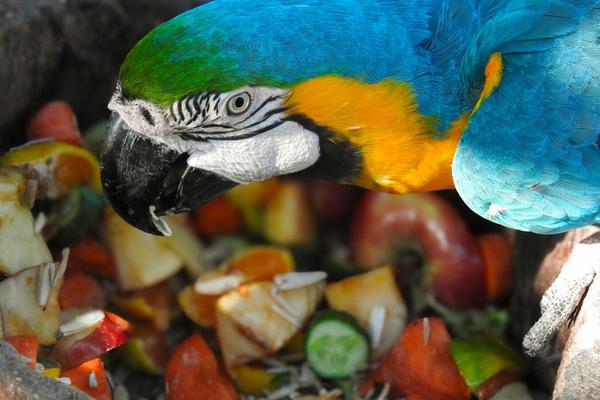
A healthy parrot diet is less about finding one “perfect” food and more about building a routine that prevents selective eating. Many companion parrots will pick sunflower seeds, nuts, or sweet fruit first and leave more balanced foods behind. Seed-heavy diets can be too high in fat and short on nutrients such as vitamin A and calcium. For most parrots, a sensible everyday plan combines a species-appropriate formulated diet with fresh vegetables, modest fruit, clean water, and limited high-fat treats.
Start With a Balanced Base, Not a Seed Bowl
Commercially formulated pellets for parrots provide a more consistent mix of vitamins, minerals, protein, fat, and other nutrients than a bowl of loose seeds. Because each bite is nutritionally similar, a bird cannot simply eat its favourite ingredients and ignore the rest. That makes pellets a useful foundation for parrot nutrition, especially for many medium and larger companion parrots.
There is no single pellet percentage that suits every species. Smaller parrots such as budgerigars, cockatiels, lovebirds, and parrotlets may be managed with a different balance that includes measured seed, while lories and lorikeets have specialised nectar-based needs. Species, age, health, activity, and body condition should shape the final plan, ideally with guidance from an avian veterinarian.
Make Vegetables the Main Fresh Food
Fresh vegetables add variety, texture, moisture, and useful plant nutrients. Dark leafy greens, broccoli, bell pepper, carrot, pumpkin, squash, peas, and cooked sweet potato are practical choices. Orange and dark-green vegetables are particularly useful sources of beta-carotene, which the body can convert to vitamin A.
Offer several colours and textures across the week. Wash produce thoroughly and cut it to a suitable size. A parrot that ignores chopped carrot may accept it grated, clipped to cage bars, or placed in a foraging toy. Presentation can make the difference between food being offered and food actually being eaten.
A Simple Everyday Plate
For a typical medium-sized parrot, think of the daily menu as a balanced base of formulated parrot food, a substantial fresh-vegetable component, and a smaller amount of fruit or other extras. Exact portions depend on the bird. Learn how much your parrot actually consumes so calorie-dense treats do not crowd out the main diet.
Keep Fruit, Seeds, and Nuts in Perspective
Fruit can be part of a healthy parrot diet, but it is generally better as a smaller share of the fresh-food offering than vegetables. Berries, melon, mango, papaya, pomegranate, and small pieces of apple with the seeds removed can add variety. Do not let fruit become the main fresh food simply because your bird prefers it.
Seeds and nuts are useful for training and enrichment because parrots find them highly rewarding, but they are easy to overfeed. Small pieces of walnut, almond, pumpkin seed, or other suitable foods can work well as rewards. Reserving these favourites for recall practice, carrier training, or cooperative care turns treats into a useful training tool.
Fresh Water and Food Hygiene Matter
Provide clean drinking water every day and change it sooner if food, droppings, or bathing contaminate the bowl. Wash food and water dishes regularly. Fresh produce and cooked foods spoil faster than dry pellets, especially in warm rooms, so remove leftovers promptly rather than leaving them in the cage for hours.
Store pellets, seeds, and nuts in a cool, dry place and follow package guidance. Damp or stale feed can deteriorate and may support mould growth, so freshness matters as much as variety.
Foods Parrots Should Not Eat
Avoid avocado, chocolate, caffeinated drinks, alcohol, very salty foods, and apple seeds. Onion is also commonly listed by veterinary sources among foods birds should avoid. Do not assume a tiny “taste” is safe simply because a person or larger pet could tolerate the same food.
Be cautious with supplements too. A parrot eating a nutritionally complete formulated diet usually does not need extra vitamins or minerals unless an avian veterinarian recommends them. Excessive supplementation can create nutritional problems rather than solve them.
Switching From Seeds to Pellets Takes Time
A seed-fed parrot should not be abruptly deprived of familiar food in the hope that hunger will force it to eat pellets. Birds can refuse unfamiliar foods longer than owners expect. Introduce the new diet gradually, confirm that the bird is actually eating it, and monitor body weight during the transition.
Consider a cockatiel that has eaten mostly millet and sunflower seed for years. Instead of removing seed overnight, offer pellets consistently while reducing seed in stages. Present pellets when the bird is most willing to explore food, and weigh the bird on a gram scale regularly. Meaningful weight loss, reduced droppings, weakness, or poor appetite is a reason to contact an avian veterinarian rather than continuing the change blindly.
Use Feeding as Enrichment
Wild parrots spend substantial time searching and working for food. A pet bird may finish a bowl in minutes. Place small portions in safe foraging toys, hide a favourite treat in bird-safe paper, or use several feeding stations. This encourages activity and makes a measured diet more interesting without simply adding calories.
Useful related topics include parrot-safe fruits and vegetables, foods toxic to pet birds, and species-specific feeding plans for common companion parrots. These are natural next steps when adapting a general feeding framework to an individual bird.
FAQ
Can parrots live on seeds alone?
A seed-only diet is not considered nutritionally balanced for most companion parrots. Seed-heavy feeding can provide excess fat while leaving gaps in vitamins and minerals. A better plan is a species-appropriate formulated diet with vegetables and controlled amounts of seeds, nuts, and fruit.
How much fruit should a parrot eat?
Fruit should generally be a smaller part of the fresh-food portion than vegetables. The exact amount depends on species, size, activity level, and health. Use fruit for variety rather than making it the main fresh component.
Do parrots need vitamin supplements?
Parrots eating a complete formulated diet usually do not need routine vitamin or mineral supplements unless a veterinarian identifies a specific reason. Avoid adding supplements automatically to food or water.
How do I know whether my parrot’s diet is working?
Track body weight, appetite, droppings, feather condition, activity, and what foods are actually being eaten rather than simply offered. Regular veterinary examinations also help identify nutritional problems before they become obvious.
Build a Routine You Can Maintain
A useful parrot diet guide should lead to a repeatable routine. Use balanced formulated food as the foundation where appropriate, make vegetables the main fresh addition, keep fruit and fatty treats controlled, provide clean water, and change diets gradually. Then adjust the plan for the species in front of you. Consistency gives your parrot a better chance of receiving sound everyday nutrition without losing the pleasure and enrichment that food provides.
