

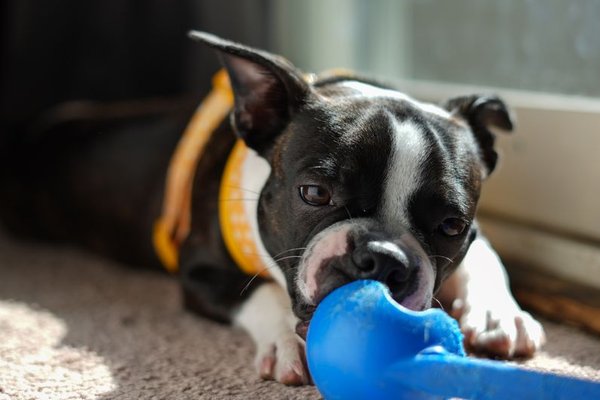
Dog enrichment videos are everywhere in 2026, but the most useful ideas are often simple. A rolled towel, a few pieces of kibble or five focused minutes with you can turn an ordinary afternoon into a satisfying challenge. Enrichment gives dogs safe ways to sniff, search, chew, solve problems, learn and make choices. It supports mental stimulation for dogs and adds variety alongside suitable daily exercise.
Choose activities that fit your dog’s age, health and confidence. Supervise homemade games, remove anything that could be swallowed, and count food rewards as part of the daily ration. Start easy, then increase the challenge gradually.
Food and Foraging Games
1. Serve a Meal in a Puzzle Feeder
Replace the bowl with a puzzle feeder that releases food when your dog nudges, rolls or slides it. Begin with an easy setting so the experience feels rewarding, especially for dogs new to puzzle feeders.
2. Make a Rolled-Towel Treat Search
Scatter kibble across an old towel and roll it loosely. Let your dog unroll it with their nose and paws. Stop if they start tearing or swallowing fabric.
3. Build a Safe Cardboard Dig Box
Fill a sturdy box with loosely scrunched paper and hide part of your dog’s meal inside. Remove tape, staples and labels, and supervise throughout.
4. Scatter Feed Around One Room
Hide small portions of food in safe, reachable places around a room. Let beginners watch the first few placements, then make later searches less obvious.
5. Freeze a Stuffable Rubber Toy
Fill a durable food toy with soaked kibble or your dog’s usual wet food and freeze it. Use the correct size and avoid unsafe ingredients, including products containing xylitol.
Scent Games for Dogs
6. Play “Find It” With Treats
Ask your dog to wait while you place a treat nearby, then release them with “find it.” Gradually move the reward behind furniture legs or under an open box.
7. Create a Household Scent Trail
Drag a dog-safe treat along the floor for a short distance and leave the reward at the end. Add gentle turns as your dog becomes more confident.
8. Try the Three-Cup Game
Hide a treat under one of three lightweight cups while your dog watches. Invite them to choose, then shuffle the cups slowly once they understand the game.
9. Hide a Favourite Toy
Let your dog sniff a familiar toy, ask them to wait and hide it somewhere easy. This provides scent-based enrichment without adding extra food.
10. Make a Snuffle Station
Hide kibble in a snuffle mat, loosely folded blanket or beneath dog-safe containers. Change the layout regularly so the search remains interesting.
Training and Problem-Solving
11. Teach the Names of Toys
Repeat one toy’s name during play and reward your dog for touching or picking it up. Later, place it beside another toy and ask for the correct one.
12. Practise a Toy-Tidy Routine
Teach your dog to pick up a toy, carry it to a basket and release it. A practical routine is a two-minute tidy before dinner, turning a household task into a brain game.
13. Learn One New Trick
Try a wave, chin rest, spin or nose target. Use reward-based training and keep sessions brief. Tricks build communication and confidence, even when they are not flashy.
14. Play the “Which Hand?” Game
Hide a treat in one closed hand and present both fists. Reward a gentle nose touch to the correct hand rather than scratching or hard mouthing.
15. Set Up a Mini Obstacle Course
Arrange cushions to walk around, a low broom handle to step over and a blanket tunnel. Keep everything stable and non-slip, and adapt the course for puppies, older dogs or mobility problems.
Play, Chewing and Calm Enrichment
16. Rotate the Toy Collection
Put most toys away and offer a small selection for several days, then swap them. Familiar toys often regain their appeal after a short break.
17. Schedule a Short Tug Session
Use a suitable tug toy and practise cues such as “take it,” “drop” and “finished.” Keep movements controlled and let your dog win sometimes.
18. Offer an Appropriate Chew
Choose a dog-safe chew that matches your dog’s size and chewing style. Supervise it, discard damaged pieces and ask your vet about dental or dietary restrictions.
19. Create a Choice-Based Exploration Area
Place several safe objects on the floor, such as a box, textured mat, toy and blanket. Allow your dog to investigate or ignore them without pressure.
20. Finish With a Calm Lick-and-Settle Activity
After active play, offer a lick mat or filled toy in a quiet resting area. This creates a predictable transition from excitement to relaxation.
Build a Routine Your Dog Will Enjoy
You do not need to complete all 20 activities in one week. Choose a few food games, scent activities, training tasks and calming options, then rotate them. For example, try scatter feeding on Monday, toy-name training on Tuesday and a dig box on Wednesday.
Watch your dog’s body language. Walking away, freezing, frantic behaviour or repeatedly asking for help can mean the activity is too difficult. Enrichment should create curiosity and satisfaction, not pressure. Useful related topics include dog body language, reward-based dog training and preventing boredom in dogs.
Frequently Asked Questions
How long should dog enrichment activities last?
Five to 15 minutes is enough for many dogs. End before your dog becomes tired, frustrated or overexcited.
Can enrichment replace a daily walk?
Usually not. It complements appropriate exercise, outdoor sniffing and social experiences. Follow veterinary advice when exercise needs to be modified.
Are homemade enrichment toys safe?
They can be when carefully prepared and supervised. Remove tape, staples, string, plastic and small pieces that could be swallowed.
How often should activities change?
Rotate them often enough to maintain interest, but repeat favourites so your dog can build skill and confidence.
Make Home Life More Interesting
The best dog enrichment activities at home are safe, achievable and matched to the individual dog. Start with one easy win, notice what your dog enjoys and build a varied routine around sniffing, foraging, learning, play and rest. A few thoughtful minutes each day can make home life richer without making enrichment feel like another chore.
