

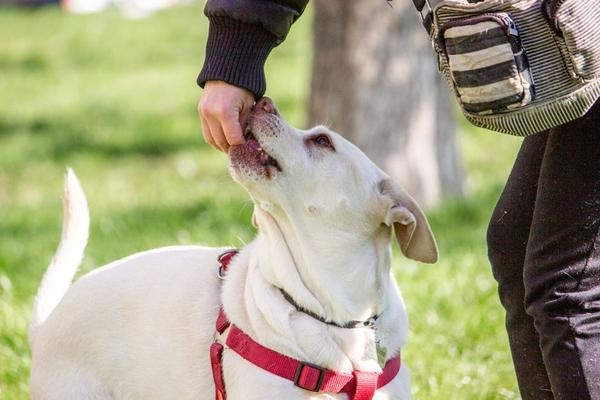
Positive reinforcement dog training methods have become the foundation of modern, evidence-informed training. Veterinary behaviour organisations and animal-welfare groups recommend reward-based approaches because they teach useful skills without relying on fear, pain, or intimidation. The idea is simple: when your dog performs a behaviour you want, you immediately provide something the dog values, making that behaviour more likely to happen again.
Effective force-free training still uses clear boundaries and sensible management. Rewards give dogs a practical way to succeed while owners build reliable behaviour step by step.
What Positive Reinforcement Actually Means
In learning theory, reinforcement is any consequence that increases the chance of a behaviour being repeated. “Positive” means something is added. When your dog sits and receives a piece of chicken, sitting has been positively reinforced. The same principle applies when a dog comes when called and is rewarded with play, praise, permission to sniff, or access to the garden.
The reward must matter to the dog. Some dogs work enthusiastically for food, while others prefer a toy, affection, or a quick game. If the behaviour becomes more frequent or reliable, the consequence is functioning as reinforcement.
Why Reward-Based Training Works
Dogs repeat actions that reliably produce good outcomes. Reward-based training makes desirable behaviour the easiest and most worthwhile choice.
When progress stalls, the dog is rarely being stubborn. The environment may be too distracting, the reward too weak, the cue unclear, or the step too difficult. Adjusting one of those factors is more productive than increasing pressure.
Punishment may interrupt behaviour, but interruption is not teaching. A dog corrected for jumping may stop temporarily without learning how to greet visitors. Rewarding four paws on the floor, a sit, or settling on a mat provides a clear replacement behaviour. This makes positive reinforcement useful for everyday manners and behaviour-change plans.
The Timing That Makes Training Clear
A reward should follow the desired behaviour quickly, ideally within a second or two. Dogs connect consequences with whatever they were doing at that moment, so delayed rewards can accidentally reinforce a different action.
A marker makes timing easier. Use a short word such as “yes” or introduce clicker training. The marker tells the dog which exact action earned the reward. Say “yes” or click once, then immediately give a treat. Repeat several times in a calm setting until the sound predicts a reward.
A Practical Sit-Training Example
Stand with your dog in a quiet room and hold a treat near its nose. Move it slowly upward and slightly back. As the dog’s head follows, its bottom will often lower naturally. The instant it touches the floor, mark the behaviour and give the treat. After several repetitions, say “sit” just before the movement begins, then gradually reduce the hand signal.
If the dog jumps, backs away, or loses interest, reset rather than correcting it. Use a smaller movement, improve the treat, or shorten the session. Force-free training works best when the correct response is achievable before reliability is expected.
How to Start at Home
Begin in a quiet space with minimal distractions. Choose one simple behaviour, prepare pea-sized treats, and train for one to three minutes. Several short sessions usually work better than one long session.
Reward small signs of progress. For recall, first reward the dog for turning toward you when its name is called, then for taking one step in your direction, and finally for returning completely. This process, called shaping, breaks a complex skill into manageable pieces.
Once a behaviour is reliable indoors, move to the garden, then a quiet pavement, then a place with mild distractions. Dogs do not automatically generalise skills, so increase difficulty gradually.
Rewards, Treats, and Fading Food
Food is useful because it is quick and precise. Use tiny portions within your dog’s daily diet. Choose higher-value food for distracting places; regular kibble may be enough at home.
You do not need to reward every familiar behaviour forever. Reward frequently during early learning, then vary the outcome as the response becomes reliable. Sometimes use food, sometimes praise or play, and sometimes a real-life reward such as opening the door after a calm wait.
Managing Unwanted Behaviour Without Fear
Positive reinforcement works best with management that prevents unwanted behaviour from being repeatedly practised. A baby gate can keep a puppy out of the kitchen, a lead can prevent chasing, and a secure bin can remove the payoff for scavenging.
Then teach an alternative. Reward lying on a mat while food is prepared, walking beside you instead of pulling, or picking up a toy instead of mouthing hands. Avoid shouting, leash jerks, shock collars, prong collars, and other aversive tools. They can create stress and damage trust without addressing why the behaviour occurs.
Sudden behaviour changes, persistent fear, aggression, or severe separation distress deserve professional help. Start with a veterinarian to rule out pain or illness, then seek a qualified trainer or clinical behaviour professional who uses reward-based methods.
Common Mistakes That Slow Progress
Owners often repeat cues before giving the dog time to respond. Say the cue once, pause, and make the task easier if needed. Another mistake is rewarding too late. During recall, mark the moment the dog commits to returning rather than waiting until it reaches you.
Training can also fail when the reward does not match the difficulty. Kibble may work in the kitchen but not near other dogs. Increase distance from distractions and use a more valuable reward rather than assuming the dog is deliberately ignoring you.
Useful related topics for further reading include puppy obedience basics, teaching a reliable recall, and choosing healthy dog training treats.
Frequently Asked Questions
Is positive reinforcement the same as bribing a dog?
No. A bribe is shown before behaviour to persuade the dog, while reinforcement is delivered after behaviour to strengthen it. Lures can help during early teaching, but they should be faded so the dog responds without needing to see food first.
Can positive reinforcement work with difficult dogs?
Yes, although serious problems need careful assessment, management, and a personalised plan. Fear, aggression, and anxiety should be addressed with veterinary input and qualified force-free support rather than punishment.
Does clicker training work better than a verbal marker?
Both can work well. A clicker produces a consistent sound, while a verbal marker is always available. The best choice is the one you can use accurately and consistently.
What should I do when my dog gets an exercise wrong?
Pause and reset without scolding. Reduce distractions, simplify the step, improve your timing, or use a better reward. Errors show that the current setup is too difficult or unclear.
Building Better Behaviour Through Clear Choices
Positive reinforcement dog training methods replace conflict with useful information. Your dog learns which choices produce rewarding outcomes, while you learn how to make those choices clear. With short sessions, good timing, suitable rewards, and gradual increases in difficulty, reward-based training can build dependable skills without sacrificing trust. The result is not simply an obedient dog, but one that understands how to succeed alongside you.
