

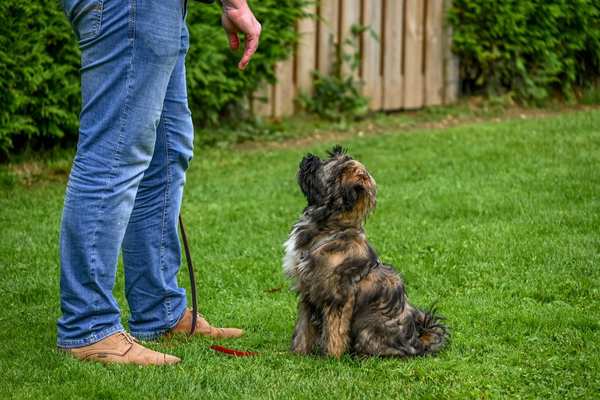
A dog does not need an impressive trick routine to be enjoyable to live with. What matters most is a small set of reliable cues that make everyday life safer and calmer. Dog obedience training starts with simple behaviours, short sessions, and generous rewards.
Use a marker word such as “yes” when your dog gets something right, then follow it with a treat, toy, praise, or another valued reward. Begin in a quiet room before adding distance, duration, or distractions. Reward-based methods help dogs understand what you want without relying on fear or intimidation.
1. Sit
“Sit” is often the easiest first cue because the movement is natural and widely useful. Ask for it before clipping on the leash, opening a door, placing a food bowl down, or greeting a visitor. Sitting becomes a practical way for your dog to ask politely for what they want.
How to teach it
Hold a treat close to your dog’s nose, then move it slowly upward and slightly back. As the nose follows, the rear usually lowers. The moment your dog sits, mark and reward. After several repetitions, say “sit” just before making the hand movement. Gradually reduce the lure until your dog responds to the word or a small hand signal.
2. Down
“Down” asks your dog to settle with their body on the floor. It is helpful during meals, café visits, vet appointments, and quiet time at home. Some dogs find this position more vulnerable than sitting, so never push their shoulders or force them down.
How to teach it
Start with your dog sitting. Place a treat at their nose, lower it to the floor, then move it slowly away along the ground. Mark and reward when the elbows touch down. If your dog keeps standing, practise beside a wall or under your bent leg so lowering the body becomes the easiest path.
3. Stay
“Stay” means remain in the current position until released. It involves three challenges: duration, distance, and distraction. Increase only one at a time.
How to teach it
Ask for a sit or down, show an open palm, and say “stay.” Wait one second, reward while your dog is still in place, then use a release word such as “free.” Build from one second to three, then five. Next, take one small step away and return before rewarding. If your dog moves, make the next repetition easier rather than repeating the cue more loudly.
4. Come
A dependable recall can prevent a dog from running into traffic, approaching an unfriendly animal, or disappearing after a scent. Good recall training should always feel rewarding. Do not call your dog to punish them or end every enjoyable activity.
How to teach it
Begin indoors with two people a few steps apart. Say your dog’s name once, follow with “come,” then move backward enthusiastically. Reward as soon as the dog reaches you and gently hold the collar before giving another treat. Outdoors, practise on a long training line until the response is strong around distractions. Never test an unfinished recall off leash in an unsecured area.
Imagine your dog notices a dropped sandwich beside a busy pavement. “Come” brings them away, while the next cue prevents them from grabbing it. Training commands as a connected safety system is more useful than practising each one in isolation.
5. Leave It
“Leave it” tells your dog not to take or approach something. It can protect them from discarded food, medication, broken glass, wildlife, and household objects. It is different from “drop it,” which is used after an item is already in the mouth.
How to teach it
Place a low-value treat inside a closed fist. Let your dog investigate without speaking. The moment they move their nose away, mark and reward from your other hand. Add “leave it” before presenting the fist. Progress to a treat under your foot, then visible items at a distance. The reward should come from you, not from the object they were asked to ignore.
6. Heel
For everyday walks, a perfect competition heel is unnecessary. Most owners need a dog who can walk beside them briefly without pulling or lunging toward distractions. Think of “heel” as a close-control cue for busy pavements, doorways, and passing other dogs.
How to teach it
Choose the side you want your dog to use and reward frequently at that leg. Take one step, mark, and treat. Then try two or three steps. If the leash tightens, stop or change direction instead of dragging the dog back. Release your dog to sniff after a successful stretch; sniffing can be a powerful real-life reward.
7. Place
“Place” sends your dog to a defined spot such as a mat, bed, or blanket and asks them to remain there until released. It is useful when guests arrive, food is being prepared, children are moving around, or your dog needs help settling.
How to teach it
Put a mat on the floor and reward any interest in it. Next, reward one paw on the mat, then two, then all four. Once your dog steps onto it reliably, add “place.” Ask for a sit or down and reward calm behaviour. Build duration gradually while staying close. The aim is to make the mat a predictable, comfortable station.
How to Make the Commands Reliable
Dogs do not automatically understand that a cue learned in the kitchen also applies in the garden or on a walk. Practise in several locations and reward more generously when distractions increase. Keep cues consistent, say them once, and give your dog a moment to respond. If performance falls apart, reduce the difficulty rather than assuming stubbornness.
Useful internal linking opportunities include puppy socialization checklist, breed-specific dog training guide, and leash training for puppies. These subjects help adapt the foundations to age, temperament, and routine.
Frequently Asked Questions
What age should basic obedience training begin?
Training can begin as soon as a puppy comes home, using short, positive sessions. Adult and senior dogs can learn the same cues. Adjust the pace for confidence, mobility, and experience.
How long should each training session last?
Two to five focused minutes is often enough for a puppy. Several short practices across the day usually work better than one long lesson.
Should I use treats every time?
Use frequent rewards while teaching a new behaviour. Once the response is reliable, mix treats with praise, play, sniff breaks, and everyday privileges. Continue rewarding often enough that the behaviour remains worthwhile.
What if my dog ignores a command?
Check whether the environment is too distracting, the cue is unclear, or the reward is not valuable enough. Move to an easier setting and rebuild success. Sudden changes in responsiveness, especially with discomfort or unusual behaviour, should be discussed with a veterinarian.
Build Skills That Work in Real Life
The most valuable commands are the ones your dog can use outside a training session. Sit, down, stay, come, leave it, heel, and place create a practical language for daily life. Train patiently, reward generously, and raise the difficulty in small steps. Consistency matters more than speed, and a calm, willing response is always more useful than obedience produced through pressure.
